Why Cartier Matters to a Collector
Most fragrance houses started with perfume. Cartier did not: it was a jeweler first, and its fragrances borrow from that world, from the panther emblem to the Pasha and Santos watches. For a collector the interest is a short, well-documented run of men’s fragrances from 1981 to 1998, followed by a very different period when the house hired its own perfumer.
The Founder
Louis-François Cartier (1819–1904) was a craftsman who came to the trade through apprenticeship rather than family. On 17 April 1847 he took over the Paris workshop of Bernard Picard at 31 rue Montorgueil and registered his first maker’s mark that same day, a lozenge with his initials separated by an ace of hearts. The business was small and still carried Picard’s name, and it only gradually became Cartier. His son Alfred eventually took over the running of the firm and moved it to more prestigious premises.
The Brothers’ Era
The next step belongs to Alfred’s three sons, Louis, Pierre and Jacques. By the time they came of age the firm was already operating on a different scale from the rue Montorgueil workshop, and their ambitions reached London, New York and the courts of Europe. That international reach is the base on which the later fragrance business was built.
Perfume Vessels Before Perfume
Cartier made vessels for scent before it sold scent of its own: the house’s perfume bottles began as jeweler’s work, and its fragrance business came decades later. I have not found a dated primary source for the earliest bottles, so I give no year. It still explains why a Cartier bottle design often matters as much to the story as the formula, as with the heart-shaped glass of Déclaration.
The First Fragrances: Must and Santos (1981)
The modern fragrance business starts in 1981 with Must de Cartier, the house’s first perfume for women. The same year brought Santos de Cartier, described as Cartier’s first men’s fragrance and named for the aviator Alberto Santos-Dumont. Santos is an aromatic woody scent with lavender, basil and juniper at the top and cedar, sandalwood and vanilla underneath. No perfumer credit for it is confirmed, because Cartier publishes none. Pasha de Cartier followed in 1992 as a fougère built on lavender and patchouli, named after the Pasha watch, with a blue cabochon on the bottle that pays tribute to the watch.
Déclaration (1998)
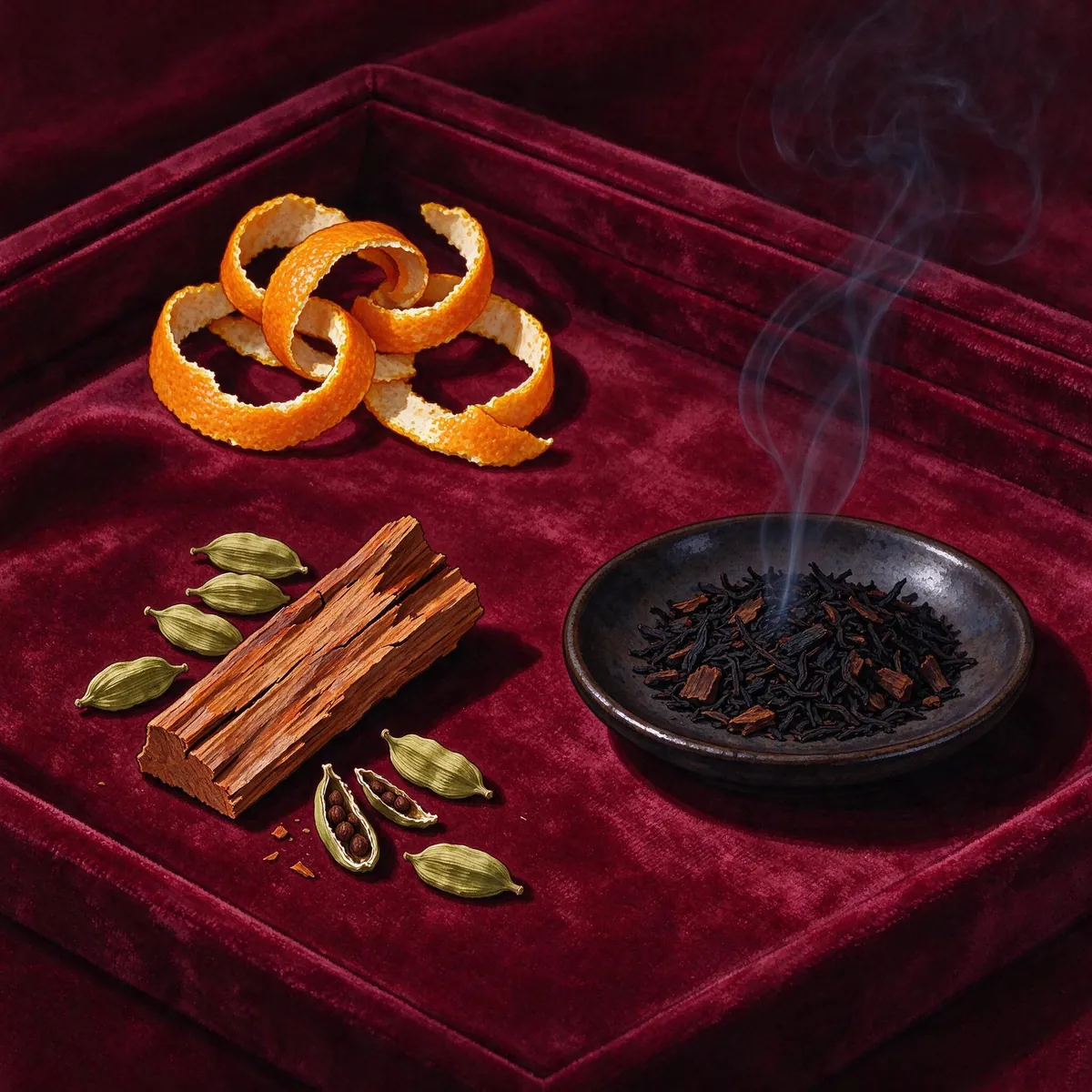
Déclaration arrived in 1998 as a deliberate step away from Santos and Pasha. Published accounts credit it to Jean-Claude Ellena, and his own interview says that the name and bottle were already chosen when he was briefed. Ellena has said his proposal lost the consumer test but was released anyway by Cartier’s perfume director. The result is a spiced, woody eau de toilette with cedarwood and cardamom as its headline materials. It is the best-known bridge between the house’s early men’s fragrances and its later perfumer-led period, and it has its own page: Cartier Déclaration, by Jean-Claude Ellena.
Mathilde Laurent and the In-House Perfumer Era
In 2005 Mathilde Laurent joined Cartier as its in-house perfumer, after more than ten years at Guerlain. Her lab sits in the Fondation Cartier building in Paris, and she has said she takes care of changes at Cartier. Her work includes Les Heures de Parfum, an exclusive collection built on the writing of Marcel Proust, and La Panthère, a gardenia-and-chypre fragrance from 2014 that honors the brand’s panther emblem. She also made the later Déclaration variations, Déclaration d’un Soir (2012) and the 2018 Déclaration parfum, which she describes as her interpretation of the original. It marks a change in method: the older fragrances were commissioned from outside, while the newer ones come from a nose who works inside the house.
Who Makes Cartier Today
As of October 2026, Cartier is one of the Maisons owned by the Swiss luxury group Richemont. Richemont lists Cartier among its Jewellery Maisons, gives its founding as 1847 in Paris, and names Fragrances among its product lines. The pages I read do not say which company holds the fragrance licence or runs the fragrance business day to day, so I make no claim on that point.
Cartier on This Site
My Cartier coverage begins with Déclaration, created by Jean-Claude Ellena. More Cartier fragrance posts will be linked here as they are published.