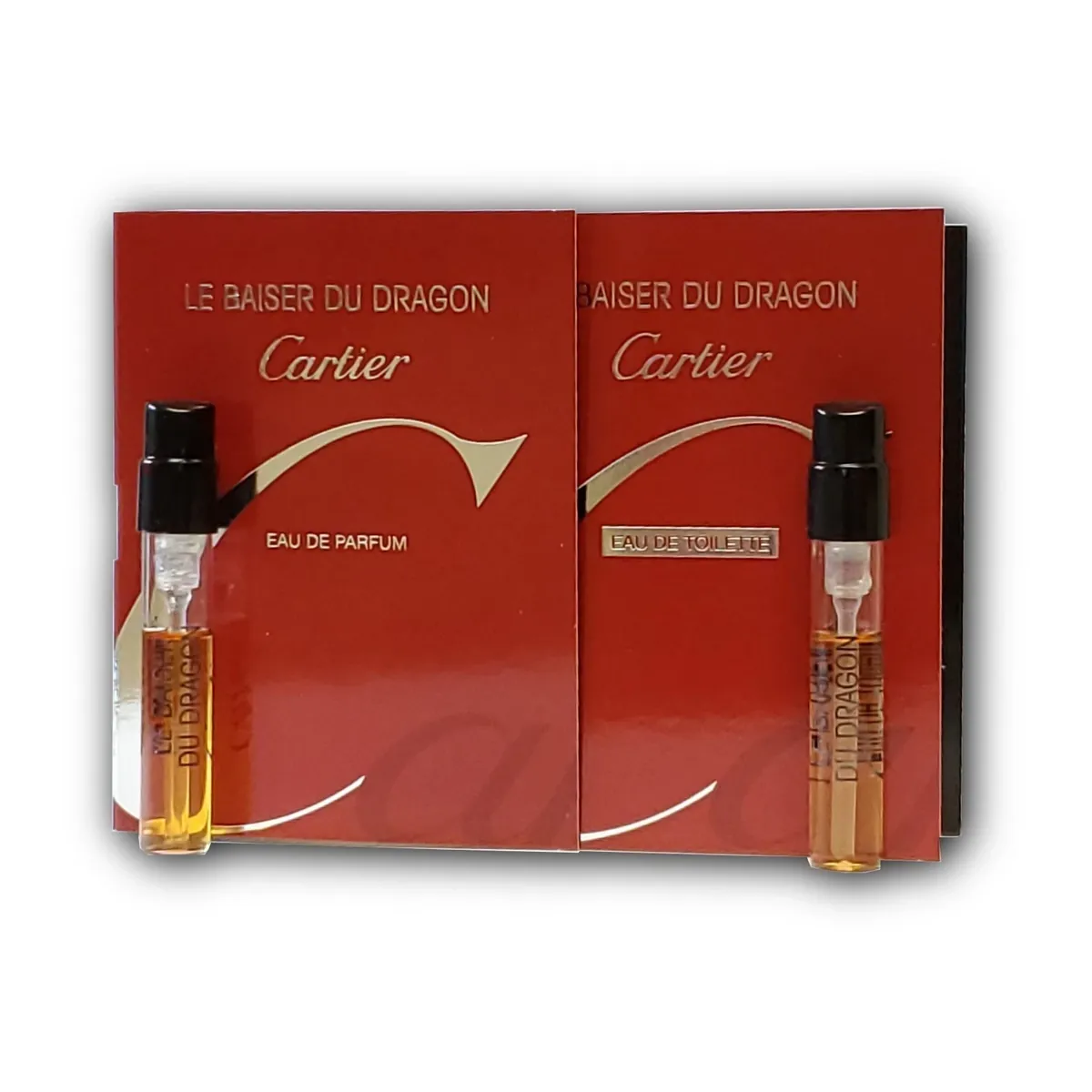
Le Baiser du Dragon matters to collectors because it ties a perfume to a piece of jewelry, which is Cartier’s own territory. It was also pitched as the start of something: Cartier’s chief executive at the time, Stanislas de Quercize, called it “the first step toward the rebirth of Parfums Cartier.”
The House Behind the Bottle
Cartier is a Paris maison founded in 1847 and now part of Richemont’s jewelry group. It entered fragrance as a product business in 1981 with Must de Cartier, and its men’s scent Déclaration followed in 1998. Le Baiser du Dragon came about five years after that and was aimed at women. According to Cartier’s fragrance general manager, Joseph Giugliano Jr., the target was women aged 30 to 45.
Lineage: A Jewelry Collection, Then a Perfume
The eau de parfum was the original release. WWD reported in June 2003 that the scent was tied to a new jewelry line of the same name, for a fall 2003 introduction. WWD described that collection as 30 pieces in red rubies, black onyx, and gold with an Art Deco feel, named for “the kiss of a dragon.” Its May 2003 report adds a series of jade rings set in a geometric diamond cage. A 2009 WWD piece on Cartier’s fragrances says Le Baiser du Dragon and Délices were “inspired directly by particular Cartier jewelry collections.”
The contemporary 2003 trade reports date the launch to 2003. Some later sources, including Osmoz, say 2004. This post follows the launch reports.
An Eau de Toilette also exists. Osmoz lists different notes for it, citrus and jasmine over vetiver and oriental notes, and calls it both a new composition and a lighter variant of the original. Whether it is a different formula is unconfirmed, and I found no confirmed perfumer or launch year for it, so this post covers the eau de parfum only. WWD’s launch report lists only the parfum and eau de parfum sprays, so the Eau de Toilette came later. Osmoz dates it 2005, while Passion Parfums places the Eau de Toilette and the extrait in 2004 and 2005 without saying which is which.
The Perfumer
WWD’s launch report credits Alberto Morillas of Firmenich: “The juice, by Alberto Morillas of Firmenich, is a woody vetiver.” Two other sources I opened, the Kafkaesque blog and Passion Parfums, also name Morillas, and no second perfumer is named in any source I opened. I found no interview in which Morillas discusses this fragrance, so the idea behind it comes from Cartier’s executives.
De Quercize said the scent was meant to create a new women’s category, “woody vetiver,” and that it “is centered around unexpected woody notes, which are not commonly used in women’s fragrances.”
How It Smells
The pyramid below is the launch pyramid as reported by WWD in 2003, a trade report of Cartier’s brief, not a current formula sheet. I could not read Fragrantica’s page, so none of its notes appear here.
The top, per WWD, is soft amaretto, neroli flower, and gardenia.
The heart is cedarwood, iris, and Bulgarian rose.
The base is woody vetiver, patchouli, smoky amber, and a tear of benzoin. WWD’s pyramid describes benzoin as a resin that smells like chocolate and caramel. The Osmoz database lists the same families and adds white musks to the heart. Its copy says the fragrance borrows the warm woodsy notes of vetiver from men’s fragrances and renders them more feminine with floral, powdery accents like rose and iris.
Cartier’s own copy today differs in emphasis. The Mexican product page calls the fragrance a “vetiver chipre” and names almond, vetiver, and benzoin as its core. WWD’s launch pyramid says amaretto, so I do not state which almond material is used.
The Bottle
WWD described the original as a clear, round glass bottle bearing the black Chinese symbol for longevity, with a black, red, and silver cap. It was designed in-house and manufactured by Bormioli Luigi. De Quercize called it a modern interpretation of vintage Cartier packaging.
Osmoz adds that it was inspired by a bottle Cartier made in 1925, combining Chinese imagery with Art Deco. The bottle on sale now may differ from a vintage one.
Wearing It
I found no published longevity or projection assessment for the eau de parfum, and no source assigns it to a season, so this post gives neither. One blog, Kafkaesque, reports that it was discontinued, brought back with a reformulation, and discontinued again. I found no Cartier statement to that effect, so treat it as a collector’s account.
Where It Sits in a Collection
Le Baiser du Dragon belongs with the Cartier fragrances that start from a piece of jewelry. Its woody-vetiver structure on a women’s fragrance is what the house itself flagged as unusual in 2003. Cartier’s men’s Déclaration is a useful contrast on the same shelf: a different decade and a different perfumer. The Eau de Toilette’s identity is unsettled, so the notes above should not be read onto it.